
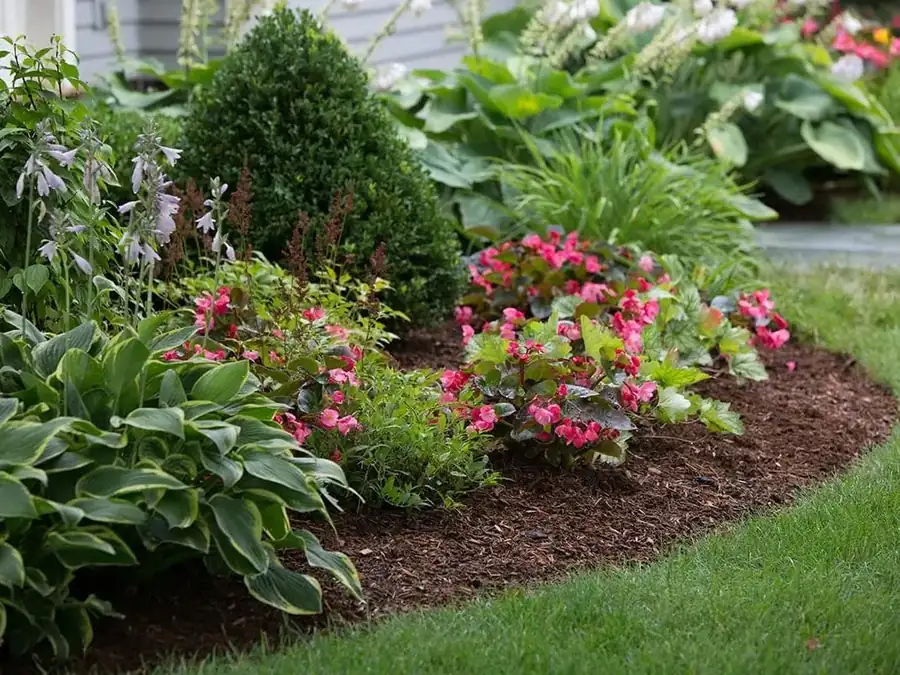
Mulching & Decorative Stone
Fresh mulch and decorative stone that protect your plants and polish your property's curb appeal.
Get a Free EstimateA fresh layer of mulch does more than look good — it's one of the most beneficial things you can do for your garden beds. In the Farmington Valley, where summer droughts and winter freeze-thaw cycles stress plants, proper mulching regulates soil temperature, retains moisture, suppresses weeds, and feeds the soil as it decomposes.
At Sunset Ridge, we install premium bark mulch, cedar mulch, and composted mulch depending on your needs and preferences. We maintain a consistent 2-3 inch depth — thick enough to suppress weeds but not so deep that it smothers root crowns or holds excessive moisture against stems. Before mulching, we edge all beds for clean definition and remove any weeds or debris.
For low-maintenance areas, walkway borders, or modern landscape designs, we also install decorative stone including river rock, bluestone chips, and Connecticut fieldstone. Stone beds are installed over professional-grade landscape fabric and edging for a clean, long-lasting finish.
What's Included
Frequently Asked Questions
How often should mulch be replenished?▾
What type of mulch is best?▾
Is stone better than mulch?▾
Can too much mulch hurt my plants?▾
Ready for a Beautiful Yard?
Get a free, no-obligation estimate for your Farmington Valley property. We'll visit your home, discuss your vision, and provide a clear proposal.
Get Your Free Estimate